






Tu Pueblo Canta is much more than a book. It is a treasure:
- a treasure that enshrines the journey of the Hispanic/Latin-American people, radiates their love of tradition, and gleams well into the future for those who will behold, learn from, and improve upon its musical riches;
- a treasure that reflects the toils and labors of a diligent and dedicated people whose faith both propels their daily toil and offers refuge from it;
- a treasure that shimmers in the kaleidoscope of creation’s diversity, with pride and appreciation for Latinos across the globe who have somehow found community in a Spanish-language Mass offered at a local church or parish;
- a treasure that proclaims dignity, affirms worth, and asserts God’s image to those facing oppression, segregation, indifference and active aggression from within society and institutions;
- a treasure that blankets and protects as a divine loving mother’s mantel against pain and misery, a balm of comfort for the weary;
- a treasure whose pages will be held in sacred hands, just as the priest holds the illustrious sacred ritual books of the Mass, with a tangible weight and depth, at once timely and timeless;
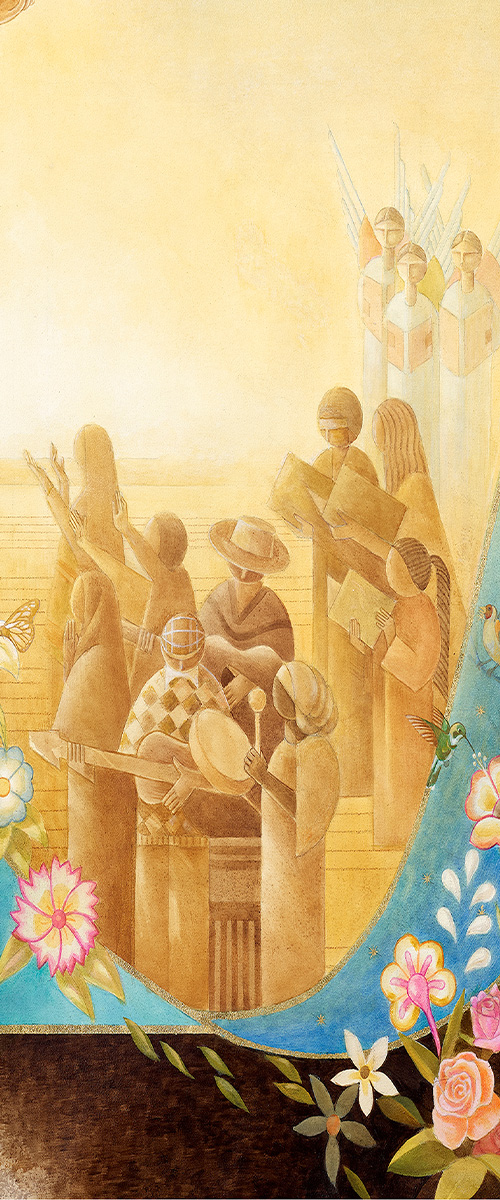
- a treasure whose adorning art increases the beauty of the sacred space it will occupy, befitting its place within God’s sanctuary;
- a treasure whose sung words will teach the faith, challenge worldly precepts, and compel a fervent lived discipleship;
- a treasure whose melodies will uplift the spirit and soul, carrying heavenward the prayers of the gathered community;
- a treasure whose embedded styles, character and rhythms will touch the heart once fully effectuated in breath and voice;
- a treasure that will inspire future musicians, authors and composers to willingly offer their Spiritfed gifts for the sake of the Church because of an ecclesial ecosystem that invites and upholds such contributions as essential to the Catholic liturgy;
- and finally, a treasure that both reflects and illumines faith so that it is overflowing with life and steeped in resurrection joy.
Members of the Hymnal Committee for Tu Pueblo Canta

Palacios Castillo

De León

Fernández

Fernández

Kolar
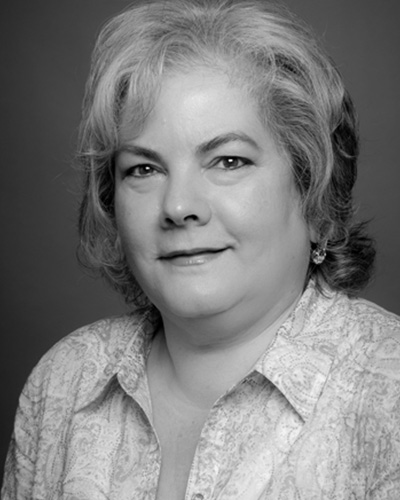
Montgomery
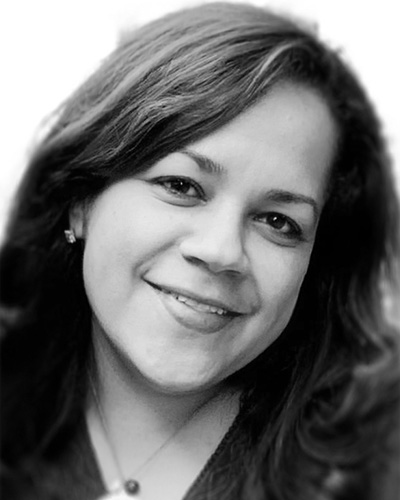
Thillet
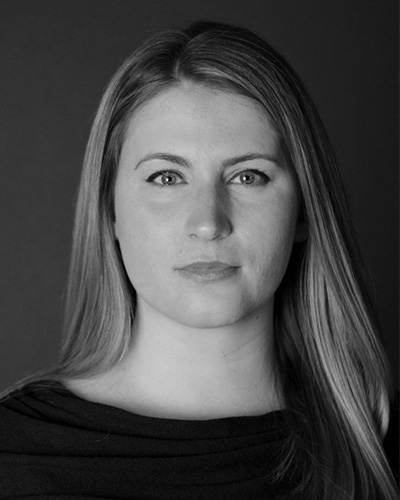
Williams
What does Tu Pueblo Canta mean to those who served on the hymnal committee? They share their thoughts in these interviews.
Watch interviews on YoutubeMusical Content
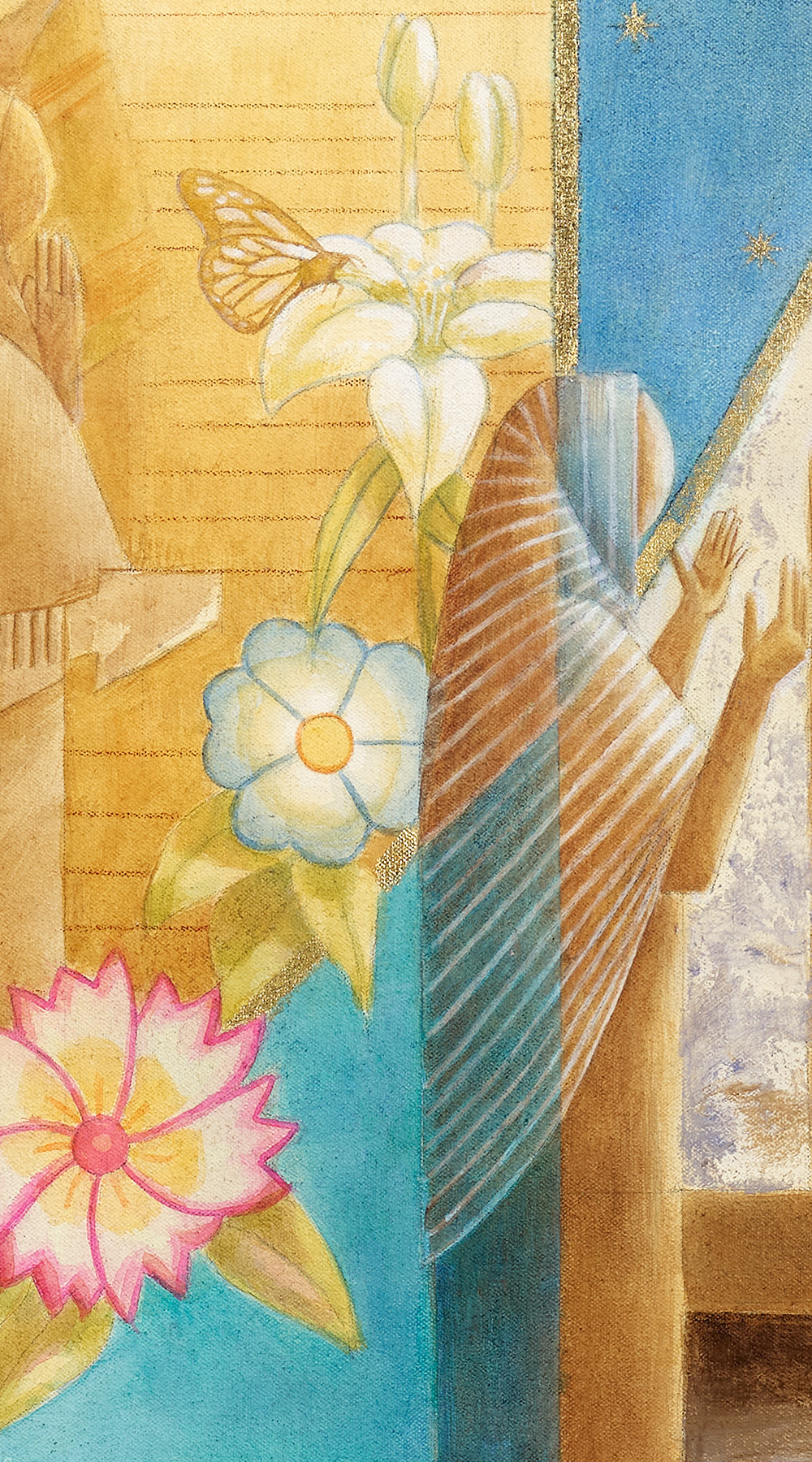
Tu Pueblo Canta contains over 600 hymns and songs, featuring 10 complete sung Masses and over 40 additional settings of the Mass Ordinary.
- More than 30 musical styles, from merengue, bolero and son cubano to huapango, carnavalito, cumbia and canto llano.
- 10 Mass settings with distinct styles and ranging in difficulty.
- Repertoire for all liturgical seasons and popular celebrations, featuring songs for Advent, Christmas, Lent, Easter, Pentecost, Quinceañeras, Weddings, Funerals, Cultural Heritage, and more.
- A complete collection of responsorial psalms for the three liturgical cycles, featuring accessible refrains and accompaniments for piano and guitar.
- Songs from the traditional Hispanic repertoire alongside classical hymnody, new works by an emerging generation of composers, and the first section of Catholic Charismatic Renewal music in a GIA hymnal.
View All Mass Settings
- Misa Gregoriana en Latin
- Misa Luna (presented in a bilingual format, Spanish and English) Peter Kolar
- Misa San PedroSantiago Fernández
- Misa Sol de JusticiaPeter Kolar
- Misa CaribeñaDiego Correa, Damaris Thillet
- Misa de Santa María del LagoSteven R. Janco
- Misa al Sagrado CorazónCarlos Zapién
- Misa RancheraPedro Rubalcava
- Misa de Santa AnaEd Bolduc
- Missa Simplex en EspañolRichard Proulx, Michael O'Connor, Henry Aquino
Notación musical en Tu Pueblo Canta
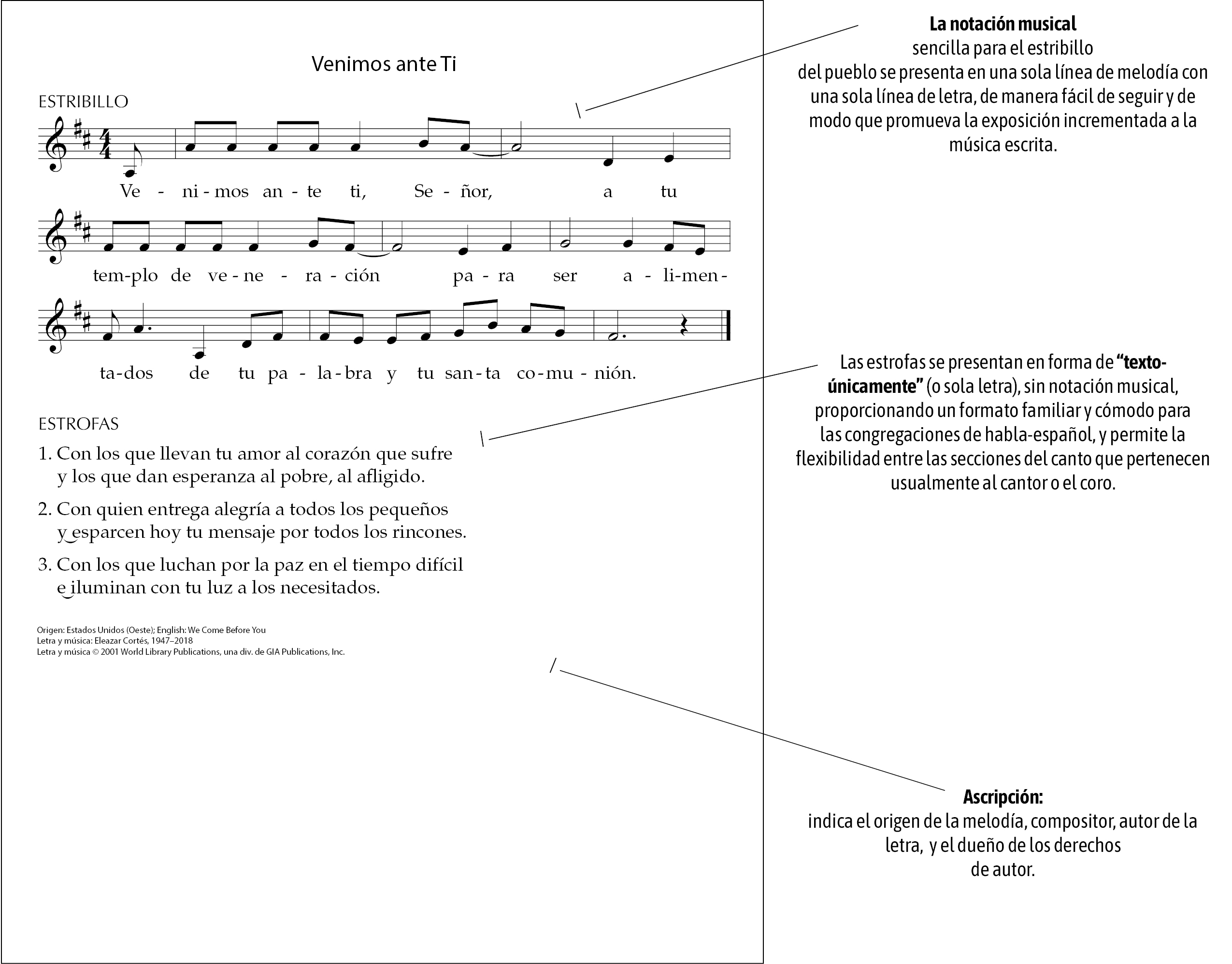
The songs in Tu Pueblo Canta have a mix of music notation and words-only. This approach is intentional, and has been carefully discerned for Spanish-speaking communities served by Tu Pueblo Canta
It is no secret that the Latino culture has a longstanding tradition of transmitting songs aurally—or what we call “by ear.” In fact, much of the music known and beloved by generations of Latinos has been handed down via this method, including songs traditionally sung in church. As a result, most hymnals and congregational songbooks used in Spanish-language Masses typically provide only the song texts, without any concern for notated melodies. The widespread preference for this format, coupled with the resulting lack of exposure to notation over the years, has led many Spanishspeaking congregations to accept a words-only format as the norm for their hymnals. By comparison, English-speaking congregations have for generations used hymnals containing musical notes, such that for those communities, picking up a hymnal and singing from its pages, irrespective of the singer’s ability to actually “read music,” is the norm.
GIA Publications is fully cognizant of the resulting paradox: Why would a Spanish-speaking congregation have any desire for a product built on musical notation—something fundamentally unfamiliar to the intended audience and even viewed with some level of suspicion?
The answer lies in what the Church asks of its leadership. Sing to the Lord: Music in Divine Worship (one of the key documents governing liturgical music practice in the Unites States) reminds us that “the musical formation of the assembly must be a continuing concern in order to foster full, conscious, and active participation” (#26), the latter being a central tenant of Sacrosanctum Concilium. The Church seeks to empower its gathered assemblies in their ability to more fervently sing God’s praises, in this case, through active “musical formation.” And, like the liturgy itself, the Church understands the importance of “notating” on paper the elements of the rites to be performed over and over again—including its musical melodies and lyrics. It is in this spirit that GIA embraces its call as a music publisher to enshrine for future generations the Hispanic church’s treasure trove of liturgical music so that it may be replicated in worship for years to come.
For this reason, Tu Pueblo Canta offers the best of both worlds: simplified, “gentle” musical notation is provided for portions of songs that are geared to the whole assembly, while a more comfortable and familiar “words-only” format is provided for other portions of a piece less reliant on the assembly (e.g. verses for the cantor or choir). In this way, Tu Pueblo Canta seeks to move the needle incrementally for Spanish-speaking communities toward a wider embrace of music notation, in line with the concept of assembly musical formation encouraged by Sing to the Lord—while still “meeting people where they are.”
In Tu Pueblo Canta, the musical notation will never be overly complicated, because the song lyrics are always limited to one line of sung text below a musical “stave” (a line of notated melody). Likewise, other potentially confusing elements that can dominate fully notated pieces are avoided for the sake of simplicity and the user’s comfort level. In endeavoring this format, Spanish-singing communities may learn to wholeheartedly embrace singing with music notation, without fear or trepidation, thus opening up worlds of opportunity for choirs and congregations alike.
A Personal Reflection
For as long as I can remember, from my mother’s womb it seems, I have praised God through song—specifically, the beloved songs of Sunday Mass and the infectious anthems of the Catholic Charismatic Renewal. Having been raised in a family of missionary musicians, I was profoundly shaped by the transformative power of the Holy Spirit and sustained by the unending fountain of grace that flows from the Eucharist.
Upon emigrating to this country, many things in my life naturally changed: the language, customs, and general rhythm of life. However, something remained unchanged—my faith in God and the assuring comfort provided by these childhood songs. Singing in community taught me that I did not walk alone in this path; being in community revealed to me that we are many who hold in our hearts the same faith, the same prayers, and the same desire to follow in the steps of Christ.
This hymnal honors the musical treasures that have accompanied us across generations, the treasures that, even miles from the lands and places we may have left far behind, offer us a sense of home. The importance of Tu Pueblo Canta resides not in those who created it, but in the fundamental intent from which it was born: to accompany the people of God in their journey, to honor traditions and heritage, and to celebrate the beautiful ways in which the Hispanic church expresses, celebrates, and sings its faith.
Lesly Palacios Castillo, Ph.D.
PhD in Neuroscience, composer, and committee member of Tu Pueblo Canta
Bring Tu Pueblo Canta to Your Community!
View and Purchase All EditionsTu Pueblo Canta es mucho más que un libro.Es un tesoro:
- un tesoro que custodia el caminar del pueblo hispano, irradia su amor por la tradición y proyecta su luz hacia el futuro de quienes lo contemplarán, aprenderán de él y crecerán a partir de sus riquezas musicales;
- un tesoro que refleja los afanes y labores de un pueblo diligente y entregado, cuya fe impulsa su trabajo cotidiano y a la vez le ofrece refugio;
- un tesoro que resplandece en la diversidad de la creación como en un caleidoscopio, con orgullo y gratitud por los latinos de todo el mundo que han encontrado un sentido de comunidad y pertenencia en la celebración de la Misa en español en una parroquia local;
- un tesoro que proclama la dignidad, afirma el valor y reconoce la imagen de Dios en quienes enfrentan opresión, segregación, indiferencia y agresión activa dentro de la sociedad y de sus instituciones;
- un tesoro que cobija y protege como el manto de una madre amorosa y divina frente al dolor y la miseria, un bálsamo de consuelo para los fatigados;
- un tesoro cuyas páginas serán sostenidas por manos sagradas, así como el sacerdote sostiene los ilustres libros sagrados de los ritos de la Misa, con un peso y una profundidad tangibles, a la vez temporal y eterna;
- un tesoro cuyo arte ornamental realzará la belleza del espacio sagrado que ocupará, digno de su lugar dentro del santuario de Dios;
- un tesoro cuyas palabras cantadas enseñarán la fe, desafiarán los preceptos del mundo y nos moverán hacia un discipulado vivido con fervor;
- un tesoro cuyas melodías elevarán el espíritu y el alma, llevando hacia el cielo las oraciones de la comunidad reunida;
- un tesoro cuyos estilos, carácter y ritmos entrelazados tocarán el corazón, cuando estén plenamente encarnados en el aliento y la voz de todos;
- un tesoro que inspirará a futuros músicos, autores y compositores a ofrecer libremente sus dones, alimentados por el Espíritu, en favor de la Iglesia, gracias a un ecosistema eclesial que invita y sostiene tales aportes como esenciales para la liturgia católica;
- y, finalmente, un tesoro que refleja e ilumina la fe de tal manera que rebosa de vida y la impregna de la alegría de la resurrección.
Miembros del Comité del Himnario Tu Pueblo Canta
Palacios Castillo
De León
Fernández
Fernández
Kolar
Montgomery
Thillet
Williams
¿Qué significa Tu Pueblo Canta para quienes formaron parte del comité del himnario? Ellos lo cuentan en estas entrevistas.
Vea las entrevistas en YouTubeContenido Musical
Tu Pueblo Canta contiene600 himnos y cantos, con 10 Misas cantadas completas y más de 40 cantos adicionales del Ordinario.
- Más de 30 estilos musicales, desde merengue, bolero y son cubano hasta huapango, carnavalito, cumbia y canto llano.
- 10 Misas cantadas de distintos estilos y niveles de complejidad, entre ellas la Misa Gregoriana, la Misa Caribeña y la Misa Ranchera.
- Repertorio para todos los tiempos litúrgicos y las celebraciones populares, con cantos de Adviento, Navidad, Cuaresma, Pascua, Pentecostés, Quince Años, Matrimonio, Exequias, Herencia Cultural y más.
- Una colección completa de salmos responsoriales para los tres ciclos litúrgicos, con estribillos accesibles y acompañamientos para piano y guitarra.
- Cantos del repertorio tradicional hispano junto a himnodia clásica, obras nuevas de una generación emergente de compositores y la primera sección de música de la Renovación Carismática Católica en un himnario de GIA.
Consulte la lista de Misas cantadas completas de Tu Pueblo Canta
- Misa Gregoriana en Latin
- Misa Luna (presentada en forma bilingüe, español e inglés) Peter Kolar
- Misa San PedroSantiago Fernández
- Misa Sol de JusticiaPeter Kolar
- Misa CaribeñaDiego Correa, Damaris Thillet
- Misa de Santa María del LagoSteven R. Janco
- Misa al Sagrado CorazónCarlos Zapién
- Misa RancheraPedro Rubalcava
- Misa de Santa AnaEd Bolduc
- Missa Simplex en EspañolRichard Proulx, Michael O'Connor, Henry Aquino
Notación Musical Selectiva
Los cantos de Tu Pueblo Canta combinan secciones con notación musical y secciones únicamente con texto. Este enfoque es intencional y ha sido discernido pensando en las comunidades de habla hispana a las que servirá Tu Pueblo Canta.
La cultura hispana cuenta con una larga tradición de transmitir el canto de manera oral—lo que comúnmente llamamos “de oído”. De hecho, gran parte de la música conocida y querida por generaciones de latinos se ha transmitido por este medio, incluyendo música tradicionalmente cantada en la iglesia. Como resultado, la mayoría de los himnarios y cantorales congregacionales utilizados en Misas en español suelen ofrecer únicamente los textos, sin considerar la notación de las melodías. La preferencia por este formato, unida a la falta de exposición a la notación a lo largo de los años, ha llevado a muchas comunidades hispanohablantes a aceptar el formato exclusivamente con texto como la norma en sus himnarios. En contraste, las comunidades de habla inglesa han utilizado durante generaciones himnarios con notación musical, de modo que tomar un himnario y cantar desde sus páginas, independientemente de la capacidad real de “leer música”, es lo habitual.
GIA Publications reconoce plenamente la paradoja que esto plantea: ¿Por qué una congregación de habla hispana desearía un recurso con notación musical—algo fundamentalmente ajeno a su experiencia y, en algunos casos, visto con cierto recelo?
La respuesta se encuentra en lo que la Iglesia espera de su liderazgo. Cantemos al Señor: La Música en el Culto Divino (uno de los documentos clave que rigen la práctica de la música litúrgica en los Estados Unidos) nos recuerda que “la formación musical de la asamblea debe ser una preocupación constante con el fin de fomentar la participación plena, consciente y activa de los fieles.” (n. 26), principio central de Sacrosanctum Concilium. La Iglesia busca capacitar a sus asambleas para que canten con mayor fervor alabanzas a Dios, en este caso, mediante una formación musical activa. Y, al igual que la liturgia misma, la Iglesia reconoce la importancia de documentar por escrito los elementos de los ritos que se celebran continuamente—incluyendo sus melodías y textos. Por ello, GIA asume su responsabilidad como editorial musical de preservar el vasto tesoro de música litúrgica de la Iglesia hispana para las futuras generaciones, de modo que continúe reproduciéndose en la celebración litúrgica durante muchos años.
Por esta razón, Tu Pueblo Canta ofrece un enfoque equilibrado: una notación musical simplificada y accesible en aquellas partes del canto destinadas a toda la asamblea, y un formato más familiar y cómodo, exclusivamente con texto, en secciones del canto que dependen menos de la participación asamblearia (por ejemplo, las estrofas a cargo del cantor o del coro). De este modo, Tu Pueblo Canta busca avanzar de manera gradual a las comunidades hispanohablantes hacia una mayor aceptación de la notación musical, en sintonía con la formación musical de la asamblea promovida por Cantemos al Señor; a la vez que respeta y parte de la realidad de las comunidades.
La notación musical en Tu Pueblo Canta nunca será excesivamente compleja, ya que cada melodía se presenta con una sola línea de texto colocada bajo el pentagrama (una línea de melodía escrita). Asimismo, se prescinde de elementos que, aunque comunes en partituras completas, podrían resultar confusos para el usuario, privilegiando así la sencillez y la comodidad. Con este formato, las comunidades que cantan en español pueden aprender a acoger plenamente el uso de la notación musical sin temor ni resistencia, abriendo así nuevas posibilidades tanto para los coros como para las asambleas.
Una Reflexión Personal
Desde el vientre de mi madre he alabado a Dios con los cantos tradicionales de la Misa dominical y de la Renovación Carismática Católica. Al crecer en una familia de músicos misioneros, fui envuelta por el poder transformador del Espíritu Santo y sostenida por la fuente inagotable de gracia que brota de la Eucaristía.
Al emigrar a este país, muchas cosas cambiaron: el idioma, las costumbres, el ritmo de la vida. Sin embargo, algo permaneció firme—mi fe en Dios y el consuelo de los cantos aprendidos desde la infancia. Cantando en comunidad descubrí que no caminaba sola; somos muchos los que tenemos en el corazón la misma fe, las mismas oraciones y el mismo anhelo de seguir los pasos de Cristo.
Este himnario honra los tesoros musicales que nos han acompañado a lo largo de generaciones y que, aun lejos de la tierra que nos vio nacer, nos devuelven el sentido de hogar. La importancia de Tu Pueblo Canta no reside en quienes lo elaboraron, sino en la intención con la que fue concebido: acompañar al Pueblo de Dios en su caminar, reconociendo su cultura y la manera viva en que la Iglesia hispana expresa, celebra y canta su fe.
Lesly Palacios Castillo, Ph.D.
Doctora en neurociencia, compositora y miembro del comité de Tu Pueblo Canta